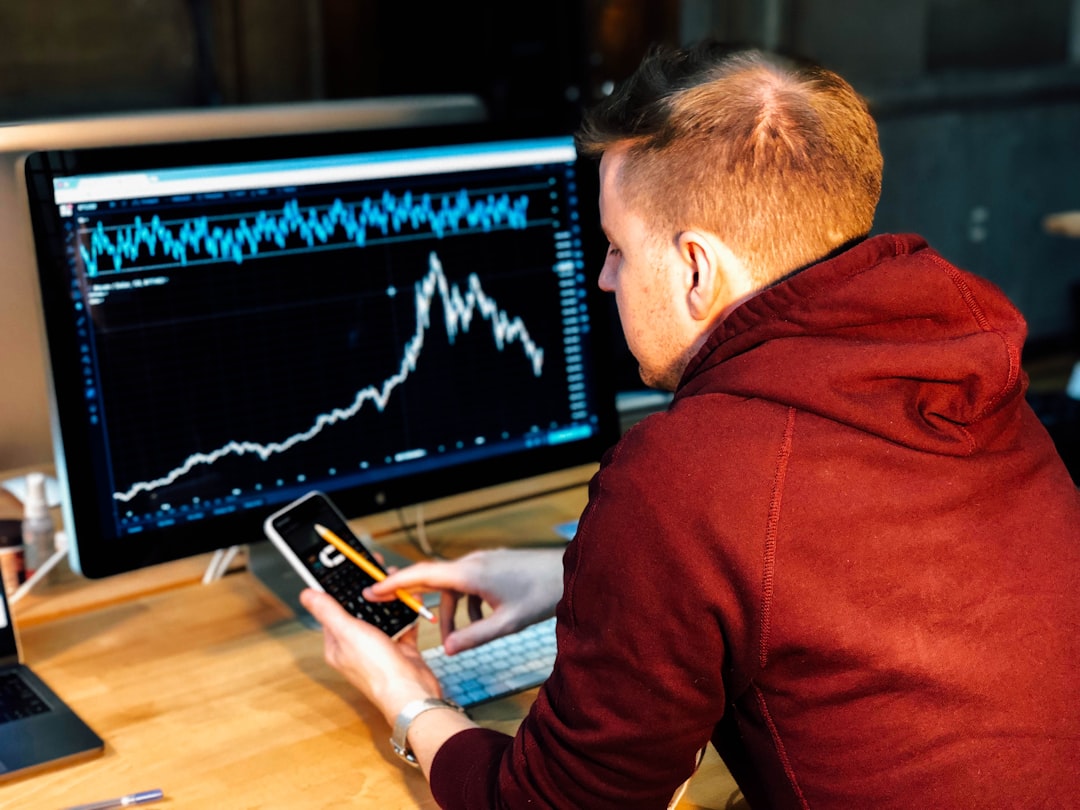
When the Bank of Japan unexpectedly adjusted its yield curve control policy in late 2022, currency traders who caught the Reuters flash within seconds made or preserved fortunes. Those who were still scrolling a financial newsletter from that morning did not. The gap between those two groups wasn’t intelligence or experience — it was information latency. And across global markets, that gap is widening at a pace that is fundamentally restructuring how retail and institutional investors alike think about news consumption.
The Speed Problem Nobody Wants to Admit
For decades, the financial press served a relatively simple function: inform investors about what had already happened, provide analysis, and occasionally surface forward-looking signals. That model assumed a world in which markets digested news over hours or days. Today, algorithmic trading systems can react to a headline in under a millisecond, front-running human readers before the second sentence is even parsed. This isn’t a marginal shift — it’s a structural transformation in the relationship between journalism and price discovery.
What makes this particularly thorny is that most retail investors have not adjusted their information habits accordingly. Many still rely on aggregated daily briefings or weekly market summaries, formats that made perfect sense when trading volumes were lower and price movements more gradual. But in an era where a single Federal Reserve statement can swing equity indices by two percent in under three minutes, delayed consumption of news is not just suboptimal — it can be genuinely costly.
The Rise of the Informed Amateur — and Its Limits
The democratization of financial information has been one of the genuine success stories of the internet era. Platforms, newsletters, and real-time aggregators have given individual investors access to data streams that, twenty years ago, were available only to institutional desks paying tens of thousands of dollars annually for terminal access. Earnings call transcripts, central bank minutes, geopolitical developments — all of it now reaches the retail investor almost simultaneously with the professional.
Almost. That qualifier matters enormously. The challenge is no longer access to raw information but the ability to contextualize it fast enough to act meaningfully. A report showing hotter-than-expected inflation figures means different things depending on whether equity markets are already pricing in a dovish pivot, whether bond yields are elevated, and what the currency markets are signaling at that precise moment. Traders who monitor the latest trading news across multiple asset classes simultaneously are better positioned to read those cross-market signals than those who consume financial news in isolation.
This is where the “informed amateur” often stumbles. Reading more is not the same as reading better. Volume of information, without a framework for prioritization, can actually increase noise and decision-making errors — a phenomenon behavioral economists sometimes call information overload paralysis.
What Separates Signal from Noise in Financial Journalism
Not all financial news is created equal, and the category distinctions matter far more than most investors appreciate. Tier-one market-moving events — central bank decisions, non-farm payrolls, major earnings reports — are well-understood triggers. Most traders know they are coming and have positions sized accordingly. The greater edge, increasingly, lies in second-order news: supply chain disruptions that haven’t yet hit corporate guidance, geopolitical developments affecting commodity routes, or regulatory shifts in one jurisdiction that will ripple into another within weeks.
Sophisticated news consumption means distinguishing between what moves markets today and what will move them next quarter. The former is dominated by algorithmic traders who have already priced the information in before a human reader finishes the headline. The latter is where careful, contextual reading of global developments still offers genuine analytical leverage — the kind that longer-form financial journalism, when done rigorously, is uniquely positioned to provide.
The Institutional Response
Hedge funds and proprietary trading desks recognized this dynamic years ago, which is why many have invested heavily in natural language processing tools designed to extract sentiment and trading signals from news text in real time. But the underlying premise — that quality, timely news content drives better trading outcomes — is the same principle available to any disciplined individual investor. The technology edge held by institutions is real, but it is narrower than assumed in the areas that require human judgment: geopolitical interpretation, sector-specific context, and long-horizon thematic positioning.
A Different Kind of Literacy
The investors who navigated the volatility of 2020, 2022, and the subsequent rate cycle most effectively shared a common trait: they treated news consumption as a skill to be actively developed, not a passive activity. They built habits around source diversity, cross-referenced developments across asset classes, and maintained what traders informally call a “running thesis” — a continuously updated view of the macro environment against which incoming news is tested.
That discipline, more than any particular platform or data feed, is the durable edge. The BoJ traders who acted in seconds back in 2022 weren’t just faster — they already knew exactly what that specific headline meant for their positions. Speed, without prior understanding, is just noise traveling quickly.