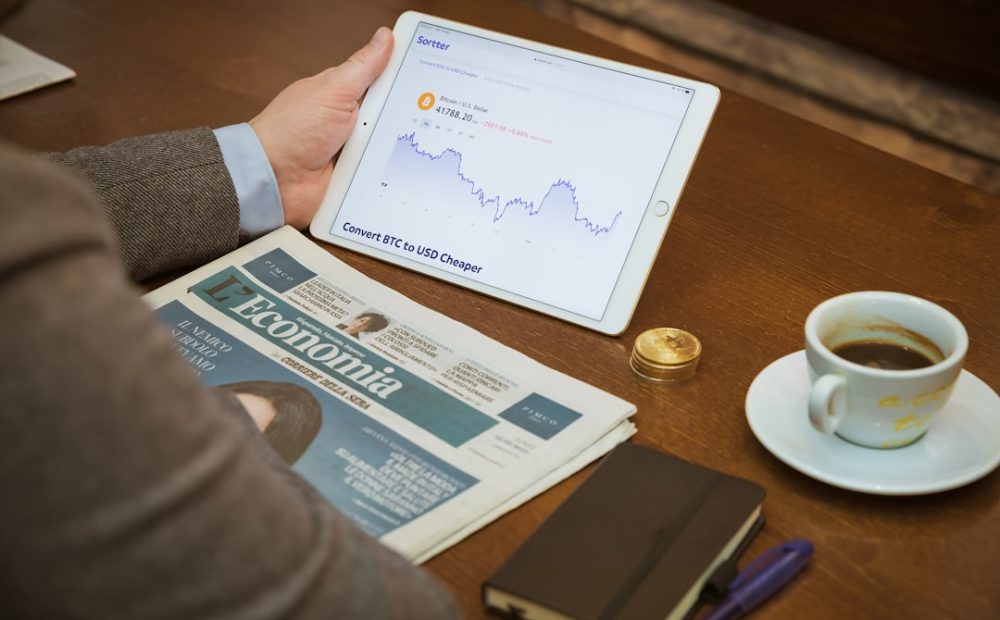
When markets lurched violently in the hours following an unexpected central bank announcement last spring, analysts noted something that would have been unremarkable a decade ago but now carries serious implications: a significant portion of retail trading volume had moved before most institutional desks had even opened their morning briefings. The culprit, if you can call it that, was speed — specifically, the accelerating infrastructure of real-time news consumption and its growing entanglement with financial behaviour.
The Compression of the News Cycle and What It Costs Us
The traditional news cycle, once measured in broadcast schedules and print deadlines, has effectively ceased to exist for anyone with a smartphone and a market-linked portfolio. Headlines now arrive in bursts, contextualized by algorithms that prioritize engagement over accuracy, and consumed by audiences that are simultaneously investors, voters, and consumers. The result is a kind of permanent low-grade urgency — a state in which the gap between information and reaction has narrowed to seconds.
This compression carries real costs. Cognitive load research consistently shows that humans are poorly equipped to process high-frequency information flows without defaulting to heuristic shortcuts. When those shortcuts govern financial decisions, the consequences can be substantial. Panic selling, FOMO-driven buying, and misreading of geopolitical signals as market signals — these are not new failure modes, but the velocity of modern news delivery makes them more likely and more frequent. A correction that might once have played out over days now completes in hours, leaving less time for measured analysis to catch up with instinct.
Global Events, Local Portfolios: The Integration Problem
One of the more underappreciated shifts in contemporary finance is how thoroughly global news has become inseparable from retail investment strategy. Events in Taiwan’s semiconductor supply chain, regulatory announcements out of Brussels, or currency interventions in Tokyo routinely move domestic indices in ways that would have seemed abstract or remote to ordinary investors twenty years ago. Portfolios are structurally global even when investors think of themselves as purely domestic.
This creates what might be called an integration problem: the news sources that most people rely on were not designed — and are not optimised — to translate geopolitical complexity into actionable financial context. Breaking news services excel at velocity; financial analysis excels at depth. The overlap is thinner than readers often assume. For investors trying to navigate this gap, resources like financial news updates that aggregate global headlines can serve as a useful first layer of situational awareness, provided readers resist the temptation to treat aggregation as analysis.
The Rise of Narrative Risk
Economists and behavioural researchers have grown increasingly interested in what some call “narrative risk” — the degree to which dominant media storylines, rather than underlying fundamentals, drive asset price movements. This is not conspiracy thinking; it is a documented feature of markets in which participant psychology is itself a variable. When a particular narrative — say, an impending recession, or a geopolitical conflict threatening supply chains — achieves saturation coverage, its effect on sentiment can become partially self-fulfilling, at least in the short term.
The challenge for news organisations is that the incentives run in the wrong direction. Dramatic narratives generate clicks, shares, and return visits. Nuanced corrections of those narratives generate considerably less traffic. The structural economics of digital media thus create a systematic bias toward stories that amplify uncertainty. For readers, this means developing something like a contrarian reflex — not reflexive skepticism of all coverage, but a disciplined habit of asking what the dominant narrative might be missing, and who benefits from its persistence.
Separating Signal from Noise in Practice
Practically speaking, sophisticated consumers of financial news have developed a layered approach: fast feeds for situational awareness, slower analytical sources for context, and — critically — a personal framework for distinguishing between news that affects the broad direction of markets and news that affects specific holdings or sectors. The mistake most retail participants make is applying the same urgency to all three categories, treating a headline about geopolitical tension with the same reactive energy as a direct earnings revision from a company they hold.
Developing that discrimination is less about finding better sources than about building better habits. A pre-market scan of global headlines is useful. Checking those headlines again every fifteen minutes throughout the trading day is, for most investors, counterproductive noise that masquerades as diligence.
Speed Is Not an Edge
There is a persistent myth in retail investing culture that consuming news faster confers an advantage. In practice, the opposite is often true. The investors most consistently harmed by real-time news flows are those who act on them most readily. The compression of the news cycle that seemed, when markets lurched last spring, like a force imposing itself on rational decision-making is, on closer inspection, a mirror — reflecting back the collective anxiety of a market culture that has confused information velocity with wisdom.