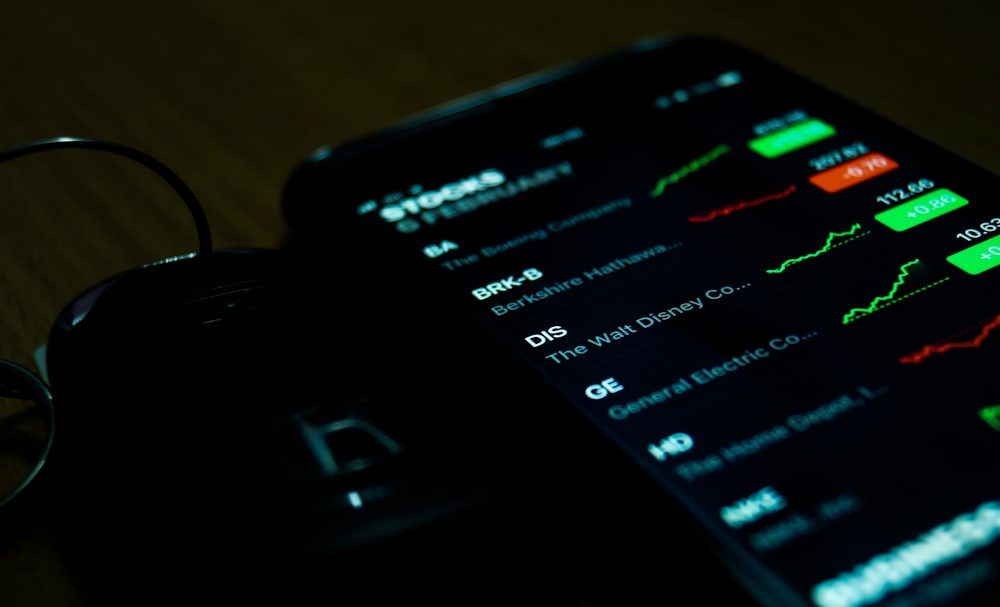
When a single tweet from a central bank official can move equity indices by two percent in under three minutes, something fundamental has shifted in how financial markets and global news interact. The compression of information cycles — from days to hours to, now, seconds — has created a paradox: more data is available than ever before, yet informed decision-making among retail and institutional investors alike has arguably become harder, not easier.
The Signal-to-Noise Problem at the Heart of Modern Markets
Markets have always responded to news. What has changed is the velocity and volume of that response, and the degree to which algorithmic systems now act on headlines before any human analyst can read past the first sentence. High-frequency trading systems are estimated to account for a substantial majority of daily equity volume in major markets, and many of these systems are explicitly programmed to parse news feeds, social media sentiment, and wire service dispatches in real time. The result is that a geopolitical development in one timezone can ripple through derivative markets on another continent within milliseconds.
For retail investors — and even for many mid-tier institutional players — this creates a structural disadvantage. By the time a human being has processed a breaking development, assessed its likely implications, and moved to act, the initial market reaction has already been priced in. The second and third-order effects, however, often take longer to materialize, and that gap is where informed, patient analysis still holds genuine value.
Why Context Has Become the Scarcest Commodity
The proliferation of news sources has not, paradoxically, led to a surplus of context. Quite the opposite. The competitive pressure on digital news outlets to publish first has systematically squeezed out the explanatory journalism that helps readers understand why a development matters, not merely that it occurred. A flash headline announcing an unexpected shift in a country’s trade balance tells an experienced economist something meaningful; it tells the average investor almost nothing actionable without supporting analysis.
This is part of the reason that aggregators and curated intelligence platforms have grown significantly in popularity among financially engaged audiences over the past several years. Readers looking for a consolidated view of market-moving events — from central bank communications to commodity supply disruptions — have gravitated toward destinations that collate and contextualize in one place. Resources offering trading updates alongside broader geopolitical and macroeconomic coverage speak directly to this appetite: the investor who needs to know what happened in Brussels and what it means for bond yields before the opening bell doesn’t have time to triangulate across a dozen separate publications.
The Geopolitical Dimension Traders Can No Longer Ignore
One of the more significant shifts of the past decade has been the increasing entanglement of geopolitics and market fundamentals. For much of the postwar era, sophisticated investors could reasonably treat political developments as a secondary variable — important occasionally, but generally subordinate to earnings cycles, interest rate trajectories, and sector-level dynamics. That model has become increasingly unreliable.
Supply chain fragmentation following successive global disruptions, the weaponization of trade policy as a diplomatic instrument, and the growing frequency of sanctions regimes have made geopolitical literacy something close to a prerequisite for serious market participation. Sectors that once seemed insulated — semiconductor manufacturing, agricultural commodities, energy infrastructure — have been demonstrated to be acutely sensitive to the kind of developments that previously lived only in the foreign policy pages. Investors who tracked only financial data while ignoring the broader news environment were repeatedly caught off-guard during periods that, in retrospect, had visible warning signs scattered across the global headlines.
Institutions Are Responding — But Slowly
Major asset managers have responded by building out dedicated geopolitical risk desks and partnering with specialist intelligence firms. For smaller players, that level of institutional infrastructure is neither practical nor affordable. The democratization of this kind of analysis — making macro-aware, news-integrated market intelligence accessible outside the bulge-bracket ecosystem — remains an incomplete project, though the trajectory is encouraging. Fintech platforms, independent research newsletters, and curated news services have all made meaningful inroads in recent years.
Patience Remains an Underrated Edge
What the speed of modern news cycles obscures is that the underlying fundamentals of good investment decision-making have not actually changed. The investors who have consistently navigated volatile, news-driven environments most successfully tend to share a common trait: they consume more information than their peers but act on less of it. They treat breaking news as raw material, not instruction. They wait for the context to emerge, the initial algorithmic overreaction to correct, and the genuine signal to separate itself from the noise.
In a media environment built to reward urgency and punish patience, that disposition is easier to describe than to maintain. But the same compression of news cycles that has made markets more reactive has also, in a roundabout way, created more opportunity for the disciplined analyst willing to let the dust settle — just as it was when the first ticker tape machines made Wall Street feel, to a previous generation, dangerously fast.